Introduction
For any organisation managing a fleet of two‑way radios—whether in public safety, construction, logistics, or industrial operations—battery procurement represents a recurring operational expense that demands strategic scrutiny. The global two‑way radio battery market was valued at approximately USD 1.2 billion in 2024 and is projected to grow at a steady CAGR of 6.5% through 2033. Within this expanding market, procurement professionals face a perennial question: should we source original equipment manufacturer (OEM) batteries or opt for compatible aftermarket alternatives?
This analysis examines the total cost of ownership, performance metrics, safety considerations, and supply chain implications to help international buyers make informed, data‑backed procurement decisions.
 Understanding the Two Options
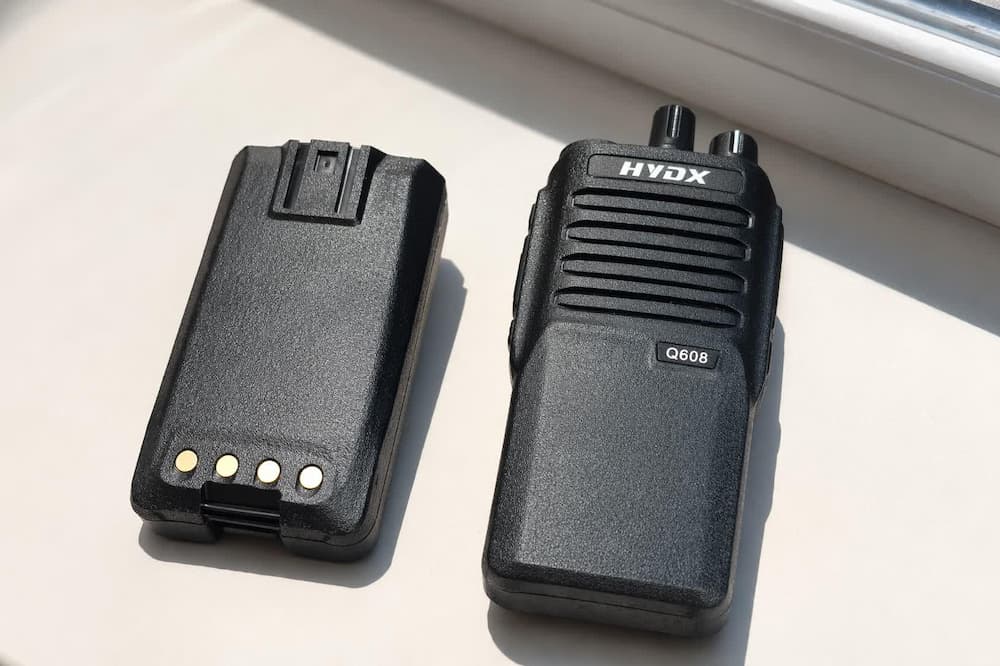
OEM Batteries are manufactured by or under strict specification for the original radio brand—Motorola Solutions, JVCKenwood, Hytera, Icom, and L3Harris being the dominant players. Each batch undergoes comprehensive testing for capacity, voltage stability, and thermal performance before leaving the factory. These batteries feature specifications that match your radio’s exact power requirements and physical dimensions.
Aftermarket / Compatible Batteries are produced by third‑party manufacturers who reverse‑engineer OEM specifications to create compatible alternatives. Quality levels vary considerably—from premium suppliers using Grade A cells with rigorous quality control, to budget operators delivering subpar products with voltage drops, reduced capacity, or shortened lifespans.
Cost Comparison: Upfront Price vs. Total Cost of Ownership
The immediate price differential is undeniable. OEM batteries typically cost 30–50% more than aftermarket alternatives due to brand premiums, rigorous testing, and proprietary designs. For example, a Motorola OEM battery may retail in the mid‑to‑high forty‑dollar range, while comparable aftermarket units can be found for as little as $15–$19. Some premium aftermarket suppliers claim 50% cost savings while offering OEM‑comparable quality.
However, upfront savings do not always translate to long‑term value. A proper total cost of ownership (TCO) calculation must factor in several dimensions. The initial purchase price is obviously higher for OEM, but so is its typical cycle life—OEM batteries often deliver 500+ cycles, translating to 18–24 months of service life under normal use. Premium aftermarket units, using Grade A cells, can reach 300–500 cycles and last 12–18 months, whereas budget aftermarket options often fall below 300 cycles, requiring replacement every 6–12 months. That means the replacement frequency for budget aftermarket batteries can be twice as high as that of OEM, eroding any initial savings. Furthermore, the hidden cost of downtime—radios out of service, worker inefficiency, and emergency replacement logistics—can be substantial. Industry data suggests that OEM’s longer lifespan and reliability can reduce downtime‑related costs by as much as 40% over a three‑year ownership period, which often offsets its higher sticker price in critical applications.
Performance and Reliability: The Hidden Variables
OEM batteries deliver consistent performance that matches your radio’s design specifications. They maintain stable voltage output throughout their discharge cycle and are engineered to handle temperature extremes and demanding operating conditions. OEM batteries also form a perfect seal with the radio, preserving its dust and waterproof IP rating—a critical consideration for outdoor and industrial environments.
Aftermarket performance varies dramatically based on the manufacturer’s quality standards and component selection. High‑quality aftermarket batteries can match OEM performance levels when built with certified Grade A cells and proper protection circuits. However, lower‑grade options commonly exhibit voltage drops under load—which directly affect transmission range—as well as reduced actual capacity versus advertised specifications, premature capacity degradation after only 100–200 cycles, and inconsistent fitment due to dimensional tolerances that may compromise the radio’s sealing.
A typical two‑way radio battery offers 300–500 charge cycles, translating to 12–24 months of service life with proper care. Premium aftermarket units using Grade A lithium‑ion cells can achieve 500+ cycles at 80% capacity retention, while budget alternatives often fall short of these benchmarks, forcing earlier replacement and increasing total cost per day of operation.
Safety, Certification, and Compliance
For international procurement, regulatory compliance is non‑negotiable. Reputable suppliers—both OEM and aftermarket—must demonstrate adherence to CE certification for European market access, RoHS compliance for hazardous substance restrictions, and UN38.3 certification for safe air transport of lithium batteries. OEM batteries carry guaranteed certification and documented compliance with all relevant standards.
For aftermarket suppliers, verification is essential. Buyers should always request full test reports covering thermal stability, overcharge protection, cycle life performance, and environmental safety. Premium aftermarket manufacturers increasingly offer global compliance readiness, strictly adhering to CE, FCC, UN38.3, and RoHS standards, and they are usually willing to share independent laboratory reports. For mission‑critical applications in public safety, aviation, or industrial environments, the compliance and reliability guarantees of OEM batteries often justify the premium, as any non‑compliance could lead to regulatory penalties or operational hazards.
Compatibility and Integration Risks
OEM batteries guarantee perfect compatibility with specific radio models—eliminating concerns about fit, connection issues, or communication protocols. Motorola’s IMPRES batteries, for example, feature proprietary charging chips that report charge and life health status to the radio for display—a functionality unavailable with most aftermarket alternatives. Aftermarket manufacturers design their batteries to match OEM specifications, but slight variations in dimensions or connector quality can occasionally cause intermittent contact or charging errors. For buyers, this means that rigorous supplier vetting and sample testing are mandatory before committing to large‑volume orders. Testing should include physical fitment, charge/discharge cycles under actual operating conditions, and performance in the temperature range your workforce encounters.
Procurement Strategy: A Tiered Approach
Based on our experience serving international clients, we recommend a tiered procurement strategy that aligns battery quality with operational criticality.
For mission‑critical operations—such as public safety, emergency response, and aviation—we advise prioritising OEM. The premium cost is justified by guaranteed performance, documented compliance, and maximum reliability. Downtime in these sectors carries costs far exceeding any battery savings, and the cost of a single failure can dwarf the cumulative price difference over years.
For high‑volume industrial use—including construction, logistics, and manufacturing—we suggest considering premium aftermarket products from certified suppliers with documented test reports, 500+ cycle ratings, and full CE/RoHS/UN38.3 compliance. Conduct blind sample comparisons to verify actual versus advertised performance, and evaluate suppliers’ production capacity and quality control processes before ordering.
For general commercial use—such as retail, hospitality, and events—aftermarket represents viable value. With proper supplier selection, the 30–50% upfront savings can deliver acceptable ROI, provided that replacement cycles are budgeted accordingly and you maintain a reasonable safety stock.
Supplier Selection Criteria for Aftermarket Sourcing
For buyers pursuing aftermarket procurement, we recommend evaluating suppliers against these measurable metrics: on‑time delivery rate (aim for ≥90%), average response time (sub‑3 hours), and reorder rate—a high repeat purchase percentage indicates customer satisfaction and consistent quality. Production scale matters too; suppliers with monthly output above 50,000 units are generally better equipped to handle volume spikes and maintain stable quality. Most importantly, request full certification documentation and test reports, not just claims. China’s manufacturing hubs in Quanzhou and Shenzhen offer tightly integrated supply chains, with lead times typically 15–25 days post‑deposit, and many established factories offer automated aging and discharge testing to ensure each battery meets its rated capacity.
Conclusion
The OEM versus aftermarket battery decision is not binary—it is a risk‑calibrated procurement choice that depends on your operational context, volume requirements, and risk tolerance. OEM batteries deliver guaranteed performance, documented compliance, and maximum reliability—the clear choice for mission‑critical applications where failure is not an option. Premium aftermarket batteries offer compelling value for high‑volume commercial applications, with 30–50% upfront savings and acceptable performance when sourced from certified manufacturers with rigorous quality control. Budget aftermarket batteries represent the highest risk—potential savings are frequently eroded by shorter lifespans, more frequent replacements, and the hidden costs of downtime and reduced radio performance. For international buyers, the most cost‑effective strategy is not simply choosing the cheapest option, but rather aligning battery quality tier with operational criticality—and rigorously vetting any aftermarket supplier through sample testing, certification verification, and performance benchmarking.
Frequently Asked Questions (FAQ)
1. How many charge cycles can I expect from an OEM versus a premium aftermarket battery?
OEM batteries typically deliver 500+ cycles with 80% capacity retention, while premium aftermarket units using Grade A cells can achieve 300–500 cycles. Budget aftermarket batteries often fall below 300 cycles. Actual cycle life depends on usage patterns, charging habits, and environmental conditions.
2. Does using an aftermarket battery void my radio warranty?
In most regions, the Magnuson‑Moss Warranty Act (US) and similar consumer protection laws in the EU prohibit a manufacturer from voiding a warranty solely because you used an aftermarket battery—unless that battery directly caused the failure. However, some OEM service contracts may restrict repairs if non‑OEM components are found to have damaged the radio. We recommend checking your specific warranty terms and keeping records of proper use.
3. How can I verify the quality of an aftermarket battery before placing a bulk order?
Always request samples and conduct independent testing—measure actual capacity with a battery analyzer, test voltage stability under load, perform multiple charge/discharge cycles, and check fitment and sealing. Also ask for certified test reports (CE, RoHS, UN38.3) and, if possible, visit the factory or request a third‑party audit.
4. Are all aftermarket batteries created equal?
Absolutely not. Quality spans from premium suppliers using automotive‑grade cells and advanced protection circuits, to low‑cost manufacturers that cut corners on cell selection, BMS (battery management system), and safety features. Always evaluate suppliers based on their quality system, certifications, and customer feedback, not just price.
5. Which procurement strategy gives the best long‑term value for a mixed fleet?
For mixed fleets with different usage intensities, we recommend a hybrid approach: use OEM batteries for radios deployed in critical or harsh‑environment roles, and adopt premium aftermarket batteries for less demanding, high‑turnover applications. This balances cost efficiency with reliability, and allows you to adjust the ratio based on actual field performance data.